Factory-direct bulk fruit ingredients engineered for beverage processing, dairy inclusions, bubble tea syrups, and functional formulations across Kazakhstan.
Understanding Macro Trends, Regulatory Technical Protocols (EAEU TR CU), Halal Mandates, and Supply Chain Infrastructure in Central Asia.
Importing commercial fruit juice concentrates into Kazakhstan requires strict alignment with Eurasian Economic Union (EAEU) standards. Key among these is TR CU 023/2011 (Technical Regulation on Fruit and Vegetable Juice Products), which sets strict parameters for sugar-to-acid balances, titratable acidity, patulin levels in apple concentrates, and heavy metal residues.
Procurement directors operating out of major industrial hubs like Almaty, Astana, and Shymkent must partner with suppliers capable of delivering comprehensive Certificates of Analysis (COA), EAC declaration markings, and full traceability paperwork to avoid border delays at Caspian transit routes or Khorgos dry ports.
Over 70% of Kazakhstan's population adheres to Islamic dietary standards. Consequently, the retail juice, dairy, and confectionery sectors demand undisputed Halal credentials. Suppliers catering to this market must possess certification from globally recognized bodies such as the Islamic Services of America (ISA) or local bodies registered with the Spiritual Administration of Muslims of Kazakhstan (SAMK).
This mandate extends beyond simple raw fruit pressing to include processing aid verifications—ensuring gelatin or non-Halal clarifying agents are completely excluded from enzymatic clarification stages.
Navigating geography is a primary competency when supplying Central Asia. Modern logistics relies heavily on the Trans-Caspian International Transport Route (TITR), often called the Middle Corridor, connecting Asian and European producers through multimodal routes across the Caspian Sea directly into Aktau or Kururyk ports, proceeding via rail to major distribution nodes.
Furthermore, Kazakhstan’s extreme continental climate—ranging from severe sub-zero winters (-30°C) to intense summer heat (+40°C)—demands robust thermal stabilization. High-Brix juice concentrates (typically 65° Brix for citrus and apple, 50° Brix for tropicals like passionfruit and mango) exhibit high natural freeze resistance due to dissolved sugars, preventing phase separation when stored in temperature-regulated flexitanks, aseptic drums, or insulated Bag-in-Box (BIB) pails.
An evaluated directory of leading industrial ingredient suppliers delivering high-Brix concentrates, purees, and fruit extracts to Central Asian food & beverage processors.
Family-owned premier blender and packer specializing in 100% natural fruit and vegetable juice concentrates, purees, and essential oils. Renowned for low minimum order quantities (down to 1 pail) and custom technical formulation capabilities tailored for international markets.
Major European producer specializing in apple, red fruit concentrates, and beverage bases. Operates large processing plants in Eastern Europe with direct rail logistics channels into Central Asia.
Global provider of technology-driven natural ingredients, fruit juice concentrates, fruit purees, and compound systems for soft drink and brewing industries.
Multinational ingredient giant supplying high-volume citrus concentrates, NFC juices, and tropical fruit pulps with global risk-management and hedging solutions.
Specializes in custom fruit and vegetable juices, purees, and concentrates focused on clean-label, non-GMO, and organic applications for premium retail lines.
Focuses on organic and non-GMO fruit-based ingredients, frozen fruit bases, and custom aseptic purees suited for dairy yogurt preparations and fruit fillings.
Major citrus processor supplying orange, grapefruit, lemon, and lime concentrates, frozen NFC juices, and essential citrus peel oils to international bottlers.
One of the world's largest frozen concentrated orange juice (FCOJ) producers, operating dedicated ocean reefer vessels and bulk maritime terminal transfers.
Specializes in processing and supplying exotic tropical fruit purees, mango concentrates, and passion fruit ingredients for export markets worldwide.
Regional consolidation suppliers offering blended stone-fruit concentrates (cherry, peach, plum) and localized logistics support across Kazakhstan, Uzbekistan, and Kyrgyzstan.
| Manufacturer | Primary Specialties | Halal Certification | Packaging Options | MOQ Threshold | Kazakhstan Lead Time |
|---|---|---|---|---|---|
| Greenwood Associates | 100% Concentrates, Purees, Essential Oils, Custom Blends | ISA Certified (Halal) | 5-Gal Pails, Aseptic BIB, Drums, Totes | 1 Pail / BIB (Ultra Low) | Air Freight: 5-7 Days / Sea-Rail: 25-35 Days |
| AGRANA Juice | Apple, Berry & Red Fruit Concentrates | Available on request | Drums, Bulk Flexitanks | 1 Container (20 FCL) | Rail (EU-EAEU): 18-25 Days |
| Döhler GmbH | Compounds, Beverage Bases, Flavor Systems | Certified Halal Facilities | Containers, IBC Totes, Drums | Multi-Drum Minimum | Trucking/Rail: 20-30 Days |
| Cargill Juice | Citrus Concentrates (FCOJ), NFC Orange | Halal Available | Bulk ISO Tankers, Drums | Full Vessel Cargo / FCL | Maritime Transit: 35-45 Days |
| Kerr Concentrates | Organic Fruit Purees & Specialty Vegetables | Certified Kosher/Halal | Aseptic BIB, Pails, Drums | 1 Pallet Minimum | Air/Multimodal: 14-28 Days |
How food scientists and plant managers integrate commercial fruit concentrates into domestic production lines to achieve optimal mouthfeel, sensory stability, and cost-efficiency.
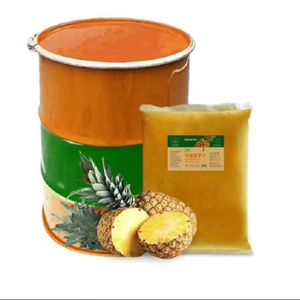
In urban manufacturing centers like Almaty and Shymkent, soft drink bottlers utilize high-Brix concentrates (such as 65° Brix Frozen Pineapple Concentrate or 70° Brix Apple Concentrate) to standardise final sugar content without adding artificial sucrose. Achieving the traditional Kazakh consumer profile requires balancing total titratable acidity (TTA) with sugar content.
By leveraging custom fruit juice blending services prior to shipping, bottlers eliminate in-plant blending errors, standardising batch consistency across seasonal runs while simplifying local inventory management.
Kazakhstan possesses a vast fermented dairy tradition. Modern dairy processors in Karaganda and Astana are increasingly introducing fruit-flavored Kefir and fermented camel-milk (Shubat) variants.
Adding raw fruit juices directly to cultured dairy causes protein coagulation due to low pH. Using high-solids fruit purees (such as Mango Puree or Strawberry Concentrates) with stabilized pectin matrices ensures uniform color distribution, smooth mouthfeel, and stable shelf life without protein curding during pasteurization.
The confectionery sector requires low-water-activity fruit ingredients to prevent moisture migration into outer pastry crusts or chocolate shells. Concentrates like Passion Fruit, Blackcurrant, and Pineapple act as natural humectants and flavoring agents.
Their high natural soluble solids (Brix) provide natural gel structures when cooked with hydrocolloids, reducing reliance on synthetic food colorings and clean-label non-compliance risks under EAEU retail inspection guidelines.
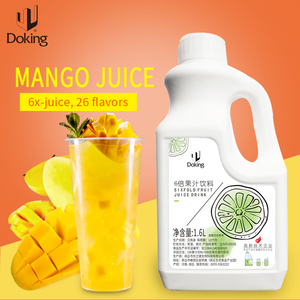
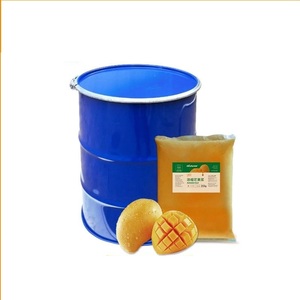
The rapid expansion of modern café culture, bubble tea chains, and craft soda brands in Kazakhstan's major metropolitan areas has expanded demand for instant-dissolve, highly aromatic fruit preparations. Ingredients like Frozen Mango Juice Concentrate and NFC Pineapple Juice serve as base platforms for premium beverage craft applications, offering high dilution ratios without flavor degradation.
Over half a century of hands-on juice expertise, stringent laboratory analysis, and flexible packaging built around plant-level operational needs.
Founded on principles of continuous consistency and transparent service, Greenwood Associates operates state-of-the-art processing, blending, and quality control facilities headquartered in Niles, Illinois. Unlike impersonal brokers, our technical staff brings real-world processing expertise to resolve complex formulation challenges—from acidity adjustment to cloud stability.
Recognizing that R&D departments require small pilot runs while commercial plants require bulk volumes, Greenwood offers one of the lowest Minimum Order Quantities (MOQs) in the global ingredient market:
Direct technical answers addressing international shipping, custom documentation, batch sampling, and regulatory approvals.
Importing commercial juice concentrates into Kazakhstan (part of the EAEU) requires: (1) EAC Declaration of Conformity matching Technical Regulation TR CU 023/2011; (2) Batch-specific Certificate of Analysis (COA) specifying Brix, acidity, turbidity, and microbiological counts; (3) Country of Origin Certificate; (4) Phytosanitary Certificate where applicable; and (5) Halal Certification issued by an accredited international agency such as ISA.
High-Brix concentrates (60° to 70° Brix) possess high dissolved sugar concentrations which act as a natural cryoprotectant, lowering the freezing point significantly below 0°C. Unlike water-based beverages, high-Brix products do not expand or burst steel drums during winter transport (-20°C to -30°C). However, maintaining insulated reefer containers or thermal blankets is recommended to prevent excessive viscosity increases during unloading.
While standard international freight achieves optimal cost-efficiency at full container load (FCL) scale (approx. 72-80 drums), Greenwood Associates supports low MOQ requests down to a single 5-gallon pail or aseptic Bag-in-Box (BIB) for R&D trial work via expedited air cargo dispatch.
Yes. Greenwood specializes in custom blending. Our laboratory can pre-blend specified juices, purees, sweetening agents, and natural acidulants to meet your exact brix-to-acid ratio target, reducing in-plant batching errors and equipment steps at your manufacturing facility.
Every lot processed by Greenwood undergoes physical, chemical, and microbiological evaluations in our HACCP-compliant Quality Laboratory. Testing covers refractometric Brix, titratable acidity, pH, yeast/mold counts, total plate count (TPC), and sensory evaluation against validated master samples.
Frozen juice concentrates stored at -18°C maintain peak organoleptic quality for 24 months. Aseptically packed bag-in-box or drum products can be stored at ambient or cool temperatures (4°C to 10°C) for 12 to 18 months without microbial degradation, though refrigerated storage is recommended for red fruit or citrus concentrates to prevent natural color darkening over time.
Connect directly with our experienced ingredient specialists to request product samples, spec sheets, custom blend formulations, and competitive freight quotes for the Kazakhstan and Central Asian markets.
Get Catalog