
Explore our certified, ready-to-ship juice concentrates, purees, and essential oils engineered for rigorous industrial manufacturing.

In the rapidly evolving global functional food, beverage, and dietary supplement landscape, securing a dependable, high-purity Beetroot Juice Concentrate supplier is a strategic imperative. Derived from premium Beta vulgaris root vegetable crops, red beet concentrate has transitioned from a traditional natural colorant to a flagship active ingredient praised for its high concentration of dietary inorganic nitrates ($\text{NO}_3^-$), betalain antioxidants (specifically betanin), and essential bio-minerals.
As an industry-leading family-owned supplier with over half a century of processing, custom-blending, and distribution excellence, our operations bridge agricultural excellence with advanced food-tech processing. Operating out of state-of-the-art facilities backed by robust FSSC 22000, Kosher, and ISA Halal certifications, we empower commercial food scientists, corporate procurement officers, and master blenders to standardize their product lines without compromising sensory integrity or bioactive potency.
 FSSC 22000 Quality System
 Kosher Certified
 ISA Halal Certified
Standardizing bulk root vegetable derivatives requires rigorous control over enzymatic activity, Brix concentration variations, optical density, and heat-induced degradation. Our process engineers employ low-temperature vacuum evaporation paired with aseptic processing lines to safeguard the delicate betanin molecular structure ($\text{C}_{24}\text{H}_{26}\text{N}_2\text{O}_{13}$).
Preserves active betanin pigment and dietary nitrates while achieving a stable 65° Brix density without caramelization off-notes.
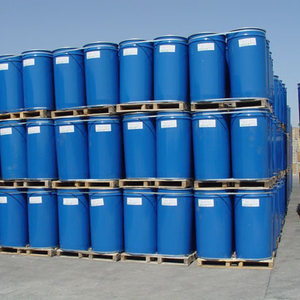
Available in 5-gallon pails, 55-gallon aseptic drums, and 270-gallon totes designed for ambient storage or cold-chain integrity.
Every lot undergoes stringent analytical validation: HPLC quantification for betanin, heavy metal screening, and micro-testing.
Depending on your end application—whether formulating high-performance sports pre-workout drinks, clean-label plant-based meats, or functional botanical gummies—selecting the appropriate concentration profile is essential for color fastness, microbial stability, and solubility.
| Grade / Variant | Brix Level (°Brix) | Key Bioactive Indicator | Primary Industrial Application | Packaging Formats |
|---|---|---|---|---|
| Standard Red Beet Concentrate | 65.0° ± 1.0° | Betanin Content > 0.40% | Beverages, Confectionery, RTD Teas | Pails, Bags-in-Box, Drums |
| High-Nitrate Sports Grade | 68.0° ± 0.5° | Nitrate ($\text{NO}_3^-$) > 3.0% w/w | Nutraceutical Shots, Performance Gel | Aseptic Drums, Totes |
| De-Flavored Beet Extract | 60.0° ± 1.0° | Low Geosmin (Reduced Earthy Taste) | Plant-Based Meats, Dairy Alternatives | 5-Gallon Pails, Drums |
| Organic Certified Red Beet Concentrate | 65.0° ± 1.0° | USDA / EU Organic Compliant | Clean-Label Foods, Organic Juices | Bag-in-Box, Drums |
As global regulatory bodies (such as the FDA and EFSA) increase scrutiny on synthetic colorants like Red 40 (Allura Red AC), corporate procurement teams are executing large-scale transitions toward natural coloring foods. Beetroot concentrate stands at the nexus of this clean-label revolution.
Major food conglomerates are systematically phasing out azo dyes in favor of water-soluble betalain colorants. Beetroot concentrate delivers a vibrant magenta-to-ruby red spectrum (pH 4.0 to 7.0), ideal for refrigerated beverages, yogurts, ice creams, and extruded cereals. Forward-thinking buyers are locking in multi-year volume contracts with established suppliers to mitigate seasonal crop yield volatility.
Clinical studies validating dietary nitrate conversion to nitric oxide via the enterosalivary pathway have sparked unprecedented demand in the sports nutrition sector. Nitric oxide enhances vasodilation, reduces muscle oxygen cost during physical exertion, and accelerates recovery. B2B buyers now demand quantified nitrate certificates of analysis (CoA) alongside standard Brix and microbiological reports.
Shipping frozen liquids in cold-chain logistics incurs high financial and carbon costs. The industry trend is moving aggressively toward ambient-stable aseptic Bag-in-Box (BIB) packaging and returnable bulk totes. Aseptic processing preserves commercial sterility while enabling long-distance shipping without thermal degradation of active pigments.
Historically, the commercial application of red beet juice concentrate presented two engineering challenges: heat-induced degradation of betanin into yellow-brown vulgaxanthin pigments, and the pronounced earthy aroma caused by geosmin. Next-generation processing technology has overcome these limitations.
Proprietary enzymatic treatments break down volatile geosmin compounds, yielding a neutral organoleptic profile suitable for subtle fruit juice blends without earthy undertones.
Advanced concentrated extracts are now engineered for optimal spray-drying and micro-encapsulation, creating heat-stable beetroot powders for baked goods and shelf-stable snacks.
Modern extraction plants utilize zero-waste technology: beet pulp byproducts are upcycled into high-fiber dietary additives, lowering overall processing footprint and raw material costs.
By integrating these technologies into our production lines, Greenwood Associates ensures that every lot delivered to your manufacturing floor exhibits exceptional color stability, predictable viscosity, and pristine flavor neutrality.
Technical, logisitical, and quality control insights curated by our senior food technologists.
We pride ourselves on offering one of the most flexible purchasing structures in the ingredient industry. While large-scale beverage plants order full truckloads or ocean containers of 55-gallon drums and 270-gallon totes, we support pilot runs, R&D trials, and boutique product launches with MOQs as low as a single 5-gallon pail or one aseptic bag-in-box.
Betanin pigment is sensitive to excessive heat exposure, oxygen, and high pH levels. Our red beet concentrate is processed under continuous low-temperature vacuum evaporation and quickly brought to standardized Brix levels. We recommend storing non-aseptic concentrate under refrigerated (32°F–40°F) or frozen conditions. For shelf-stable liquid processing, ascorbic acid or citric acid can be blended to stabilize pH between 4.0 and 5.5.
Yes. All processing operations comply with internationally recognized food safety and religious dietary standards. Our facilities maintain FSSC 22000 certification, Kosher certification, and Halal certification issued by the Islamic Services of America (ISA). Lot-specific Documentation and Certificates of Analysis (CoA) accompany every shipment.
Absoutely. Custom formulation is one of our primary core competencies. We frequently formulate co-blends featuring beetroot juice concentrate alongside apple juice concentrate, lemon juice concentrate, ginger, pomegranate, or berry purees. We match your targeted Brix, titratable acidity, color intensity, and flavor profile, delivering a turn-key premix straight to your production line.
When stored under recommended frozen conditions (-18°C / 0°F), unopened drums and pails maintain optimal sensory characteristics and bioactive levels for 24 months. Aseptically packaged products stored under cool ambient conditions (below 20°C / 68°F) feature a shelf life of 12 months prior to opening.
With decades of international freight coordination experience, our logistics team manages full door-to-door supply chains. We maintain strategic warehouse inventory nodes across major regional hubs (including Illinois, California, Texas, Georgia, Ohio, and New Jersey) to guarantee prompt delivery times and eliminate production line downtime.
Request technical specification sheets, sample kits, or custom quote pricing tailored to your production volume. Our team of ingredient experts is ready to assist your procurement needs.
Send an Inquiry