
Verified Grade-A agricultural sourcing, cold-extracted single strength purees, and specialized flavor concentrates packaged for global industrial food, beverage, dairy, and flavor processing lines.
As a premier China wholesale single strength purees exporter, our processing facilities combine agricultural proximity with European-engineered mechanical extraction, flash pasteurization, and aseptic filling technologies.
Our state-of-the-art production hubs operate under strict GFSI-recognized certifications including FSSC 22000, BRCGS (Grade A), and HACCP protocols. Every lot undergoes full-spectrum physical, chemical, and microbiological screening.
Single strength purees are highly sensitive to thermal degradation. We utilize high-speed aseptic bag-in-box (20L) and bag-in-drum (215L-220L) filling lines that lock in organoleptic fresh-fruit notes, native colors, and fiber structure without preservative additives.
Our dedicated R&D and QA laboratories execute HPLC acid profiling, GC-MS aroma evaluation, Bostwick viscosity mapping, and multi-residue pesticide screening (screening over 500 active compounds) prior to issuing Certificates of Analysis (COA).
Beyond standard single strength fruit pastes, our engineering team formulates multi-fruit matrix blends, adjusted Brix-to-acid ratio bases, and tailored viscosities to fit proprietary beverage, ice cream, and bakery production lines.
We minimize capital tie-up for food innovators and growing brands by supporting low minimum order quantities (down to single 5-gallon pails or aseptic trial totes) alongside enterprise vessel-load export contract handling.
Serving international markets across North America, Europe, the Middle East, and Southeast Asia, our purees are fully certified Kosher (pareve) and Halal (ISA certified), accompanied by complete origin traceability.
Excellence in Supply Chain Transparency: Every batch of single strength puree exported from our Chinese facilities is backed by batch-specific chain-of-custody data, non-GMO declarations, allergen-free verifications, and heavy metal testing protocols that satisfy US FDA and EU Regulation (EC) No 1881/2006 compliance standards.
Understanding the physicochemical advantages of Single Strength (NFC) purees in modern clean-label food engineering, thermal kinetics, and flavor retention.
Achieving optimal rheological properties in single strength purees depends on the mechanical breaking temperature applied immediately after fruit de-stoning and pulping:
Fruit mash is rapidly heated to temperatures between 85°C and 95°C prior to pulping. This immediate thermal shock rapidly inactivates endogenous enzymes—specifically pectin methylesterase (PME) and polygalacturonase (PG). As a result, native pectin remains completely intact, yielding a puree with high Bostwick viscosity, superior emulsion stability, and excellent water-binding capacity ideal for commercial sauces, pumpkin pastes, and bakery fruit fillings.
Fruit is pulped at lower processing temperatures (below 65°C) before undergoing rapid flash pasteurization. Controlled enzymatic activity slightly hydrolyzes pectin fibers, reducing viscosity while preserving ultra-fresh, bright fruit flavor notes and natural raw fruit colors. Cold break single strength purees are preferred by premium beverage formulators, craft breweries, and dairy processors requiring high pourability and natural fruit brightness.
Prior to aseptic thermal processing, our extraction lines pass pulped puree through high-vacuum de-aeration chambers (0.08–0.09 MPa). Removing dissolved oxygen prevents ascorbic acid degradation, enzymatic browning via polyphenol oxidase (PPO), and off-flavor synthesis during extended ambient or refrigerated storage.
Below is a standardized technical overview of analytical parameters maintained across our wholesale single strength puree export program:
| Fruit Category | Natural Brix Range (°Bx) | Acidity Range (% as Citric) | Bostwick Viscosity (cm/30s @ 20°C) | Standard Screen Mesh Size | Primary Food Application |
|---|---|---|---|---|---|
| Mango Puree (Totapuri/Alphonso) | 14.0 - 17.0° | 0.45 - 0.75% | 7.0 - 12.0 cm | 0.6 mm - 0.8 mm | Beverages, Smoothies, Yogurt |
| Peach / Nectarine Single Strength | 10.0 - 12.5° | 0.50 - 0.90% | 9.0 - 14.0 cm | 0.8 mm - 1.2 mm | Baby Food, Bakery Fillings, Jams |
| Strawberry Crushed / Puree | 7.0 - 9.5° | 0.60 - 1.10% | 12.0 - 18.0 cm | 1.0 mm - 1.5 mm | Dairy Toppings, Ice Cream, Fruit Prep |
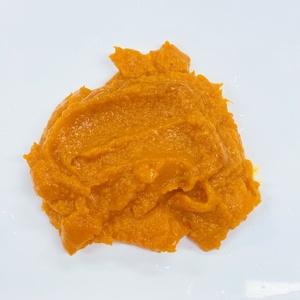
| Pumpkin / Vegetable Puree | 6.0 - 10.0° | 0.15 - 0.35% | 4.0 - 8.0 cm (High Viscosity) | 0.5 mm - 0.8 mm | Soups, Confectionery, Pet Nutrition |
| Lychee / Tropical Fruit Puree | 14.0 - 18.0° | 0.20 - 0.50% | 14.0 - 20.0 cm | 0.5 mm - 0.7 mm | Bubble Tea, Artisanal Beverages, Flavors |
Strategic sourcing insights for procurement directors, R&D managers, and beverage supply chain executives navigating global ingredient volatility.
Global consumer demand is rapidly shifting away from added sugars, high-fructose corn syrups (HFCS), and artificial hydrocolloids (like modified food starches or carboxymethyl cellulose). Food brands are increasingly replacing synthetic thickeners with single strength fruit purees. The natural fiber and soluble pectin contained within single strength purees impart rich mouthfeel, body, and natural sweetness while enabling "100% Fruit Derived" and "No Added Sugar" front-of-pack claims.
Climatic disruptions and extreme weather events in traditional growing zones (such as South American citrus belts and Southern European stone fruit orchards) have heightened crop vulnerability. China's massive agricultural infrastructure, advanced horticultural techniques, and vast climatic diversity (spanning sub-tropical southern provinces to temperate northern fruit belts) position Chinese exporters as vital, cost-stable stabilizing partners for global industrial food procurement.
Frozen fruit blocks (IQF) require high energy expenditure across frozen maritime cold chains (-18°C). The industry is heavily shifting toward ambient-stable aseptic bag-in-drum packaging. Aseptic processing allows single strength purees to remain commercially sterile for up to 18–24 months at ambient or cool temperatures (4°C–10°C), drastically reducing transportation carbon footprints and warehouse refrigeration overhead.
How advanced extraction, non-thermal preservation, and precision refining are reshaping single strength puree yields, sensory profiles, and microbiological safety.
For premium direct-to-consumer (DTC) raw beverages and ultra-high-end dairy preps, non-thermal pasteurization using ultra-high hydrostatic pressure (up to 600 MPa) inactivates vegetative pathogens while maintaining 100% of heat-sensitive vitamin C, volatile ester compounds, and natural fruit pigments.
Modern single-strength extraction utilizes closed-system multi-stage decanter centrifuges. These systems allow micro-adjustment of pulp-and-cell content (ranging from low-pulp 2% levels up to high-pulp 15%+ mouthfeel configurations) to match precise customer viscosity targets.
When specific clear-puree bases or high-solubility fruit preps are requested, targeted application of food-grade pectinases and cellulases breaks down specific polysaccharides, optimizing filtration rates without generating off-flavors.
R&D Collaboration Support: Our application laboratory assists global client R&D teams with pilot-scale sample runs, recipe compatibility testing, syneresis control evaluation in dairy matrices, and thermal degradation modeling during end-product pasteurization.
A streamlined, transparent four-step procurement framework designed to eliminate quality risk, accelerate regulatory approval, and ensure seamless customs clearance.
The buyer defines required parameters: Fruit variety, Brix target (°Bx), Titratable Acidity (TA), Bostwick viscosity, pulp content %, pulp seed/black spot allowances, and packaging preference (pails, aseptic bag-in-drum, or totes).
We dispatch bench-top production samples accompanied by a comprehensive Certificate of Analysis (COA), microbiological profiling, allergen statements, non-GMO declarations, and heavy metal laboratory clearance reports.
Upon sample approval, bulk production proceeds under continuous inline refractometer and inline viscosity monitoring. Final filled drums undergo thermal dwell verification, hermetic seal integrity testing, and micro-hold protocols prior to release.
Our freight operations management team coordinates temperature-controlled or ambient ocean container shipping (FCL/LCL). We generate full customs documentation compliant with regional import authorities (US FDA FSVP, EU TRACES, Customs-Trade Partnership Against Terrorism C-TPAT, and Chinese CIQ Export Health Certificates).
Direct answers to technical, regulatory, and logistics queries commonly raised by international ingredient buyers and quality assurance teams.
Connect directly with our senior application specialists and export logistics team to request technical data sheets (TDS), benchtop samples, or customized price quotations.
Send an Inquiry