
+1 847-579-5500 6280 W. Howard St., Niles, IL 60714, USA
0%

Co-Packed Fruit Ingredients are fruit components prepared and packed by a specialist manufacturer for use in another company’s food products. They may include diced apples, berry pieces, fruit purées, or fruit-and-sauce blends. These ingredients can arrive chilled, frozen, aseptic, or ready for direct mixing, depending on the recipe and production needs. The term can mean slightly different things across suppliers, so buyers should confirm exactly what is included.

A co-packer may wash, cut, blend, treat, and package fruit to an agreed specification. For example, a bakery might receive measured apple pieces for muffins, while a beverage producer orders a smooth mango purée. Consistent size, flavor, moisture, and packaging can make factory production easier. Still, a specification sheet cannot tell the whole story. Fruit varies with harvest, variety, and ripeness. That matters.

When evaluating Co-Packed Fruit Ingredients, food teams typically review ingredient statements, allergen controls, food-safety documentation, storage conditions, shelf life, and batch traceability. They also check how the fruit behaves after baking, thawing, or mixing. A sample may look excellent in a cup, then release too much juice in a finished product. Practical trials are useful. This guide explores common formats, processing choices, quality checks, and supplier questions, helping readers assess whether co-packed fruit fits their product and production line. Not every option will suit every recipe, and that is worth saying plainly.
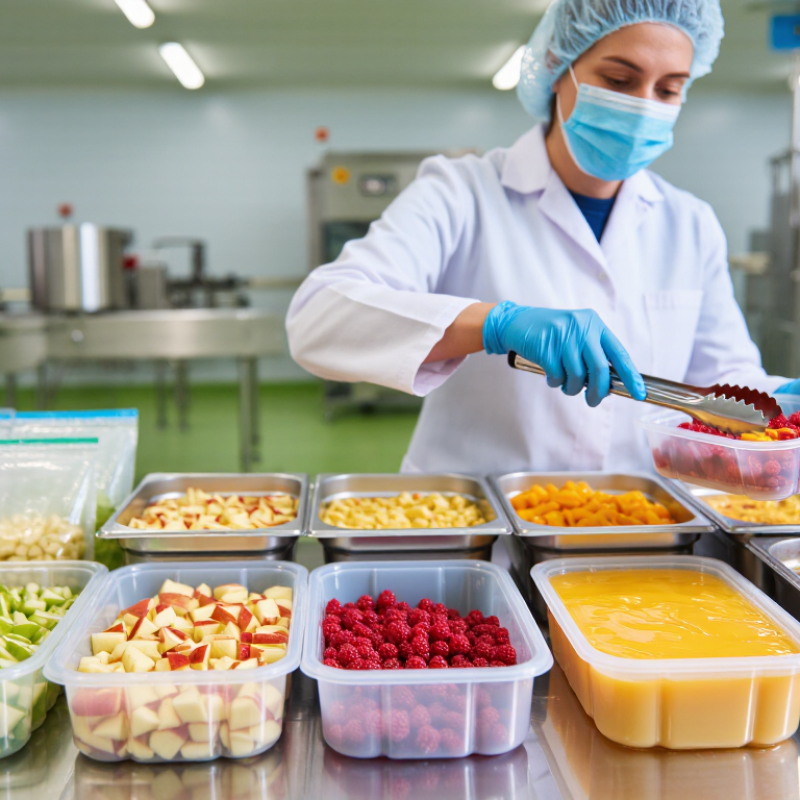
What Are Co Packed Fruit Ingredients?

What Co-Packed Fruit Ingredients Are

Co-packed fruit ingredients are fruit components prepared and packed by a specialist manufacturer for use in another company’s food products. They can include diced apples, berry purées, mango chunks, fruit fillings, and juice concentrates. Depending on the product, fruit may arrive fresh, frozen, or processed, then be sorted, cut, cooked, blended, or packed to agreed specifications. A yogurt maker might need soft peach pieces; a bakery may need a thicker filling that holds its shape. Small details matter.

The ingredients can be packed in drums, pouches, cans, or frozen cases, with formats chosen for storage, transport, and production needs. Specifications often cover fruit variety, cut size, sweetness, texture, and measurable characteristics such as soluble solids. The FAO’s 2019 State of Food and Agriculture estimated that 14% of food is lost between harvest and retail worldwide. Fruit handling is especially sensitive, though processing alone cannot prevent every loss. Quality still depends on sound raw fruit, controlled temperatures, and careful checks. And batches can vary.

Tips: Ask for a written specification and sample before production. Check how the fruit behaves after thawing or baking, not just how it looks in the package. Note any mismatch; real-world trials can reveal what lab samples miss.

How Co-Packing Turns Fresh Fruit into Ingredients

Co-packing turns fresh fruit into ingredients that food makers can use consistently. A facility may wash and sort whole fruit, remove damaged pieces, then dice, purée, press, freeze, or dry it. A ripe peach can become smooth purée; firm apples may be peeled and cut into cubes. The format depends on the next product, storage needs, and processing equipment. Not quite simple.

The need to handle fruit efficiently is real. The FAO’s 2019 State of Food and Agriculture estimated that 13.8% of food was lost globally after harvest and before retail in 2016. Fruits and vegetables had the highest loss rate, at 21.6%. Co-packing can help move fruit into usable forms during harvest peaks, but it does not prevent every loss. Bruising, uneven ripeness, and delayed transport still matter.

Processors typically check factors such as fruit solids, acidity, texture, and microbial quality against the buyer’s specifications. They may use heat treatment, freezing, or drying to support the ingredient’s intended shelf life. USDA ERS’s Food Availability data separates fresh and processed fruit supply, offering useful market context; it does not measure co-packer performance. That distinction matters. A batch can meet its target on paper yet behave differently in a recipe, so practical trials remain important.

Common Forms and Types of Co-Packed Fruit

Co-packed fruit ingredients range from whole fruit to finely processed bases. Common forms include diced or sliced fruit, purées, concentrates, frozen pieces, and dried fruit. A co-packer may receive aseptic drums of peach purée, frozen berries, or canned pineapple, then blend or pack them for a finished product. Texture matters. A purée blends smoothly, while small fruit pieces remain visible in yogurt, fillings, or snack cups.

The USDA Economic Research Service’s Food Availability (Per Capita) Data System tracks fruit across fresh, canned, frozen, and dried categories. That distinction helps buyers compare formats, not just fruit names. USDA NASS reported roughly 10 billion pounds of U.S. apple production in its 2023 Noncitrus Fruits and Nuts Summary. Large harvests can feed several channels, including fresh sales, sauce, purée, and juice concentrate. Yet the best form depends on the recipe: frozen fruit can preserve distinct pieces, while concentrate saves storage space but changes sweetness and flavor. That trade-off is easy to overlook. Specifications should state cut size, °Brix, pack medium, and whether added sugar is present; otherwise, two “strawberry” ingredients may behave quite differently.

Where Co-Packed Fruit Ingredients Are Used

Co-packed fruit ingredients appear wherever manufacturers need fruit in a controlled, ready-to-use form. These include diced apples for bakery fillings, mango purée for smoothies, and berries for yogurt or dessert toppings. A co-packer may wash, cut, cook, freeze, or aseptically pack fruit to meet a customer’s specifications. That can reduce preparation work and help manufacturers manage seasonal supply. Texture matters. A soft peach piece may suit a spoonable dessert but disappear in a baked bar.

The applications are broad. Beverage makers use purées and concentrates in juices, smoothies, and flavored drinks. Bakeries use fruit pieces, fillings, and preparations in pastries, muffins, and bars. Dairy and plant-based foods use fruit swirls or inclusions, while snack makers add dried fruit to mixes.

The scale behind these uses is substantial: FAOSTAT reported about 933 million tonnes of global fruit production in 2022. USDA Economic Research Service Food Availability data separately tracks fruit forms, including canned, frozen, dried, and juice products, underscoring that processing choices matter.

But trade-offs remain. Heat can soften pieces, and added sugar or acidity may alter flavor. Buyers should check cut size, Brix, pH, and packaging format against the actual production line, not just the sample. A specification can look perfect on paper and still behave differently after baking or storage.

How Quality and Safety Are Maintained

Co-packed fruit ingredients may arrive as diced peaches, puréed berries, or citrus filling. Their safety starts before processing: suppliers are assessed, delivery temperatures checked, and fruit inspected for damage, spoilage, and foreign material. The CDC’s 2011 foodborne-illness estimate found that roughly 48 million people in the United States become ill from foodborne diseases each year. That figure is a reminder that small controls matter. So does the fruit’s condition.

During production, operators monitor the controls that fit the recipe and process. These may include wash-water conditions, product temperature, processing time, acidity, and package seals. Codex Alimentarius’ General Principles of Food Hygiene (CXC 1-1969, revised 2022) sets out HACCP-based practices for identifying and controlling food-safety hazards. Records should connect each lot to its ingredients, checks, and release decision, making problems easier to investigate. A bright color is not proof of safety. Nor is a tidy log, by itself. Staff training, calibrated instruments, sanitation checks, and prompt action when results fall outside limits all matter. No system catches every weak signal; a bruised piece missed during inspection can still deserve a closer look.

What Are Co-Packed Fruit Ingredients? How Quality and Safety Are Maintained

For U.S. regulatory classification, acidified foods must have an equilibrium pH of 4.6 or lower. This benchmark is one part of food-safety controls—not a universal processing recipe or a complete safety test. Co-packers also follow product-specific, validated processes and quality checks.

FAQS

What forms can co-packed fruit ingredients take?

They may arrive as diced or sliced fruit, purées, concentrates, frozen pieces, or dried fruit. Texture varies.

How does fruit form affect a finished product?

Purée blends smoothly into a base. Small pieces stay visible in yogurt, fillings, or snack cups.

Why compare fruit formats instead of fruit names alone?

Frozen pieces can retain distinct shapes, while concentrate takes less storage space. But it may change sweetness and flavor.

What details should a fruit ingredient specification include?

State the cut size, °Brix, pack medium, and whether sugar has been added. “Strawberry” alone is not precise enough.

What happens when fruit arrives at a processing facility?

Suppliers may be assessed, delivery temperatures checked, and fruit inspected for damage, spoilage, or foreign material. A bruised piece can be easy to miss.

Which production controls may help maintain quality and safety?

Depending on the recipe, operators may monitor wash water, product temperature, processing time, acidity, and package seals. The right checks vary.

Why are lot records useful?

Records can link each lot to its ingredients, inspection results, and release decision. That helps teams investigate a problem.

Does bright color or a complete log prove that fruit is safe?

No. Neither is enough on its own. Training, calibrated instruments, sanitation checks, and timely action also matter, though no system catches every weak signal.

Conclusion

Co-Packed Fruit Ingredients are fruit products prepared by a specialized processing partner for use in other foods and beverages. They begin with fresh fruit that is inspected, cleaned, cut, and processed using methods such as cooking, pureeing, drying, or freezing. The resulting ingredients can take many forms, including fruit pieces, purees, concentrates, fillings, and dried fruit, depending on the needs of the finished product.

These ingredients are used in items such as baked goods, snacks, dairy products, sauces, and drinks, adding fruit flavor, texture, color, or sweetness. Throughout production, quality and safety are supported by careful handling, controlled processing, sanitation, and checks on ingredient consistency. Clear specifications and suitable packaging also help maintain the product during storage and transport. By combining fruit-processing expertise with consistent production practices, co-packing can help food makers incorporate fruit ingredients efficiently into a wide range of products.

Oliver

Oliver

Oliver is a professional marketing specialist with a deep understanding of the company’s products, customers, and the needs of the markets it serves. He regularly contributes expert articles to the company website, offering clear, practical information that helps readers understand product......