
+1 847-579-5500 6280 W. Howard St., Niles, IL 60714, USA
0%

Choosing the right Organic Fruit Purees supplier requires more than comparing prices and product photographs. Global buyers must examine ingredient origin, organic certification, processing controls, packaging, and export consistency. A mango puree may look bright in a sample jar, yet its color, Brix level, acidity, and texture can change during transport. Small details matter.

Food-safety expert Dr. Robert Brackett emphasizes, “Food safety is a shared responsibility.” This principle guides our review of the Top 10 Organic Fruit Purees Suppliers for Global Buyers. The selection considers documented quality systems, traceability from orchard to facility, laboratory testing, allergen controls, cold-chain practices, and communication reliability. Supplier experience with foodservice, beverage, baby-food, and industrial applications also deserves attention.

No supplier is perfect. That is worth admitting. A strong certification portfolio cannot replace responsive service or consistent batches. Likewise, a competitive quotation may hide high minimum order quantities, limited customization, or weak logistics support. Buyers should request recent specifications, sample approvals, shelf-life data, packaging details, and clear delivery terms before making a decision. These checks reveal practical performance, not just marketing language.

This guide is designed for importers, manufacturers, distributors, and product developers seeking dependable Organic Fruit Purees. It highlights companies that appear capable of supporting international procurement while recognizing that regional requirements may differ. Use the rankings as a starting point, not a final verdict. Supplier verification remains essential.
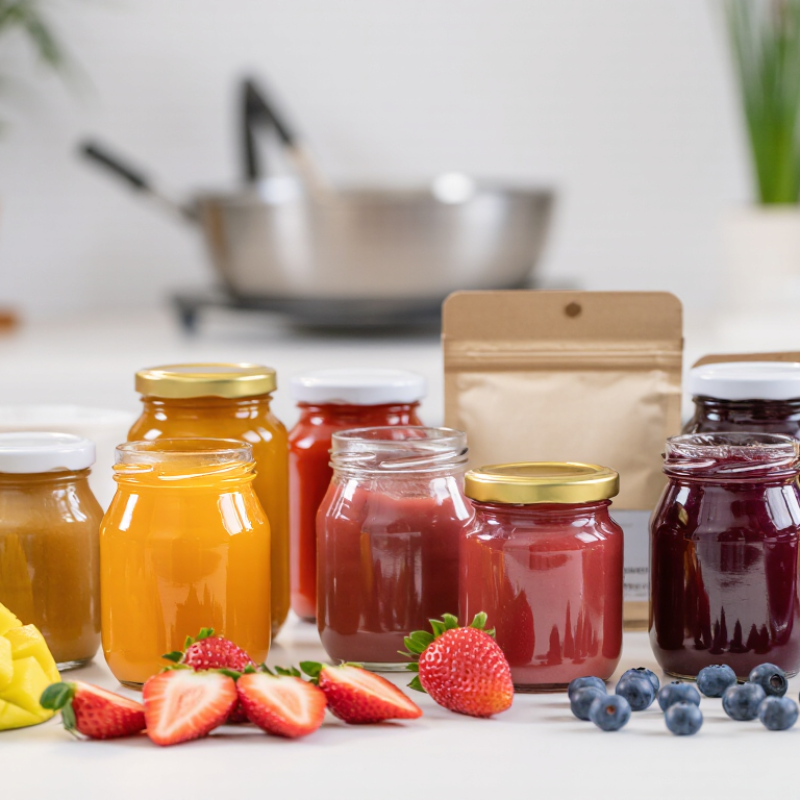
Top 10 Organic Fruit Purees Suppliers for Global Buyers

Organic Fruit Purees: Definition, Uses, and Global Market Scope

Organic fruit puree is made by crushing or sieving organically grown fruit into a smooth or lightly textured ingredient. It may contain one fruit or a blend, with no added sweeteners in some products. Processing methods vary, so “puree” does not guarantee identical texture, flavor, or concentration. Buyers should check ingredient lists, processing details, and current organic certification documents rather than rely on a product description alone.

Food manufacturers use puree in yogurt, bakery fillings, beverages, sauces, baby foods, and frozen desserts. It can add fruit flavor, color, moisture, and body, but its acidity and natural sugar content may affect a recipe. Global demand is shaped by interest in recognizable ingredients and convenient fruit-based products. Supply, harvest timing, shipping conditions, and local labeling rules differ by market. Details matter. A claim that sounds clear on a sales sheet may need careful verification.

Tips: Request samples and a specification sheet before approving a supplier. Compare fruit variety, soluble solids, acidity, packaging, and storage requirements. Ask how batches are traced and how quality is checked. Keep a little room for variation; fruit is agricultural, and even well-managed crops can differ in flavor or color.

Key Criteria for Evaluating Organic Fruit Puree Suppliers

Selecting the top 10 organic fruit puree suppliers requires more than comparing prices. Buyers should verify current organic certification, processing locations, and the certifying body’s validity. Ask for certificates covering the exact product and production site. A general certificate may not provide enough assurance.

Traceability should reach the orchard, harvest lot, and processing date. Reliable suppliers can explain how fruit is received, washed, pulped, heated, and packed. Request recent microbiological, pesticide-residue, and heavy-metal test reports from qualified laboratories. Check whether test results match the specific batch, not merely a standard sample.

Taste and texture matter greatly. Request samples in the intended packaging, then evaluate color, aroma, acidity, seeds, and consistency after storage. Small details matter. A puree that separates after thawing may create production problems. Ask about brix range, pH, allergens, additives, and aseptic or frozen formats.

Experienced suppliers should provide realistic lead times, minimum order quantities, pallet details, and temperature requirements. Review their response quality during a technical discussion. Clear answers often reveal stronger operational knowledge. However, no supplier is flawless. Documents can be complete while communication remains slow, or samples can perform well while logistics disappoint. Buyers should record weaknesses, test backup plans, and confirm corrective-action procedures before signing a long-term agreement. Sustainable sourcing claims also need evidence, such as farm records, water practices, and packaging information.

Top 10 Organic Fruit Puree Suppliers for Global Buyers

For global buyers, the top 10 organic fruit puree suppliers should be judged by evidence, not polished catalogs. Reliable suppliers show valid organic certificates, ingredient specifications, pesticide testing, allergen controls, and traceability from orchard to frozen drum. They should explain fruit origin, harvest season, Brix range, acidity, processing temperature, and packaging options. A transparent supplier answers quickly, but speed alone proves little.

Experienced buyers usually request samples from different lots. They compare color, aroma, viscosity, seeds, and thawing behavior. A mango puree may look bright in a sample but separate after transport. Ask for shelf-life data under realistic storage conditions. Confirm whether the supplier handles aseptic, chilled, or frozen products. Check export documents, minimum order quantities, lead times, and backup production capacity. Small gaps matter.

Tips

Build a scoring sheet before contacting the ten suppliers. Give separate points for certification, traceability, lab results, consistency, communication, and total landed cost. Request a recent certificate, not an old copy. Arrange a remote factory audit when travel is difficult. Keep written records of every claim. I have seen buyers focus on price and overlook thaw loss; that mistake can erase the savings. No ranking stays perfect, because crop quality changes by season. Recheck suppliers annually, and test each new lot before large-scale production.

Supplier Comparison by Products, Certifications, and Production Capacity

Global buyers should compare fruit puree suppliers across three practical dimensions: product range, certification scope, and usable production capacity. FiBL and IFOAM’s The World of Organic Agriculture 2024 reported 96.4 million hectares of organic farmland worldwide in 2022. The Organic Trade Association’s 2024 survey valued U.S. organic sales at $69.7 billion in 2023. These figures show a substantial market, but they do not prove any supplier can deliver puree at scale.

Check whether the range covers single-fruit and blended purees, and whether products are aseptic, frozen, or supplied in drums. Ask for current organic certificates and verify that they cover the processing site and relevant products. Food-safety certifications matter too. Read the scope, not just the logo. A certificate may exclude a facility or product line.

Capacity needs a closer look. Request annual output, seasonal availability, minimum order quantities, and recent on-time delivery records. Confirm whether figures refer to puree alone or total fruit processing. One uncomfortable gap remains: published capacity may describe peak output, not dependable annual supply. Ask for batch traceability details and a sample specification, including Brix, texture, and packaging format. Compare the documents with a trial shipment; paper claims can look stronger than real delivery performance.

Import, Quality Control, and Purchasing Considerations for Buyers

Top 10 Organic Fruit Purees Suppliers for Global Buyers

Importing organic fruit puree requires more than comparing prices. The FiBL and IFOAM Organics International 2024 report recorded 96.4 million hectares of organic farmland worldwide in 2022. This growing supply base also creates uneven processing quality. Buyers should verify the supplier’s organic certificate, processing scope, and transaction records before signing contracts. Destination rules can differ significantly.

Quality control should begin with a retained sample from the actual production lot. Check Brix, pH, color, viscosity, foreign matter, and microbiological results. Test pesticide residues through an independent laboratory when risk or origin requires it. The Global Food Safety Initiative emphasizes preventive food safety systems, while ISO 22000 supports documented hazard control and traceability. A clean certificate does not guarantee perfect puree. That point is easy to forget. Lot codes should connect the farm, processing date, storage temperature, and shipping container. Buyers should also confirm aseptic packaging, minimum remaining shelf life, and cold-chain responsibilities.

Tips: Request three recent certificates of analysis, not one. Compare laboratory methods and detection limits. Ask for a pilot shipment before placing a large order. Review customs documents with a qualified broker. USDA organic and European organic requirements are not identical, so confirm the exact destination standard. A cheaper offer may reflect lower fruit content, weaker traceability, or higher freight risk. Purchasing teams should record these trade-offs, even when the spreadsheet looks convincing.

FAQS

What is organic fruit puree?

It is fruit that has been crushed or sieved into a smooth or lightly textured ingredient. It may contain one fruit or a blend. “Puree” does not ensure one standard texture.

Where is organic fruit puree commonly used?

Manufacturers use it in yogurt, bakery fillings, beverages, sauces, baby foods, and frozen desserts. It adds fruit flavor, color, moisture, and body. Recipe balance still matters.

Does organic fruit puree contain added sugar?

Some products contain no added sweeteners, but buyers must check the ingredient list. Natural fruit sugar remains present. The label should answer clearly.

Which documents should buyers request?

Request current organic certificates for the exact product and processing site. Ask for a specification sheet and recent batch test reports. General documents may be insufficient.

How can buyers evaluate puree quality?

Request samples in the intended packaging. Check color, aroma, acidity, seeds, texture, and consistency after storage. A puree may separate after thawing.

Which technical details are important?

Compare fruit variety, soluble solids, acidity, pH, allergens, additives, and Brix range. Confirm whether the puree is aseptic or frozen. Storage temperatures need written instructions.

How should puree traceability be checked?

Traceability should connect the orchard, harvest lot, processing date, and batch number. Ask how fruit is washed, pulped, heated, and packed. Records should be easy to follow.

What logistics details should buyers confirm?

Confirm lead times, minimum order quantities, pallet details, shipping conditions, and storage requirements. Harvests can vary. Backup plans deserve practical testing.

Can supplier documents guarantee reliable performance?

Not completely. Documents may look complete while communication remains slow. Samples may perform well while delivery fails. Buyers should record weaknesses and review corrective actions.

Conclusion

This guide explores Organic Fruit Purees, including their definition, common applications, nutritional value, and growing importance in the global food and beverage market. It explains how these purees are used in baby food, beverages, desserts, sauces, dairy products, and other manufactured foods. The article also presents key criteria for evaluating suppliers, such as organic certification, fruit sourcing, processing methods, product consistency, food safety systems, packaging options, and supply reliability.

A practical comparison of the top 10 supplier categories helps global buyers assess product ranges, certifications, production capacity, customization services, and export experience without focusing on individual brand names. The guide also highlights essential import and purchasing considerations, including documentation, labeling, shelf life, cold-chain requirements, quality testing, sample approval, minimum order quantities, lead times, and communication standards. Together, these insights support informed supplier selection and help buyers build stable, compliant, and quality-focused sourcing strategies.

Amelia

Amelia

Amelia is a marketing professional who combines a deep understanding of the company’s products with a clear, customer-focused approach to communication. She regularly contributes expert articles to the company website, sharing practical insights, explaining product features, and helping readers......