
+1 847-579-5500 6280 W. Howard St., Niles, IL 60714, USA
0%

The global demand for Bulk Vegetable Concentrates is growing with food manufacturers seeking stable, traceable, and practical ingredients. These concentrates help reduce water content, transport weight, and storage space. They also support soups, sauces, beverages, seasonings, and prepared foods.

FAOSTAT’s 2023 crop statistics place worldwide vegetable production above one billion tonnes annually. That scale creates significant opportunities for processors with reliable raw-material networks. However, production volume alone does not prove supplier quality. Buyers must examine soluble-solids levels, color retention, microbiological controls, pesticide testing, and lot-to-lot consistency.

Recent market studies from Grand View Research and Mordor Intelligence report continued growth in vegetable-based ingredients and juice products. Their findings connect this trend with clean-label demand, plant-based diets, and convenience food consumption. The reports also show regional differences in processing capacity, pricing, and consumer preferences. Figures vary between research firms. That matters.

This ranking evaluates ten notable suppliers through a practical procurement lens. It considers product range, processing technology, certifications, export reach, documentation, and customization capability. Certifications may include FSSC 22000, BRCGS, ISO 22000, or organic approval, depending on the product and facility.

Not every supplier fits every application. A carrot concentrate specialist may not provide beetroot or spinach at the same standard. Buyers should request recent specifications, sample results, allergen statements, and traceability records before signing contracts. Small details matter, especially when concentrate enters a high-volume formula. Supplier rankings are useful starting points, not final purchasing decisions.
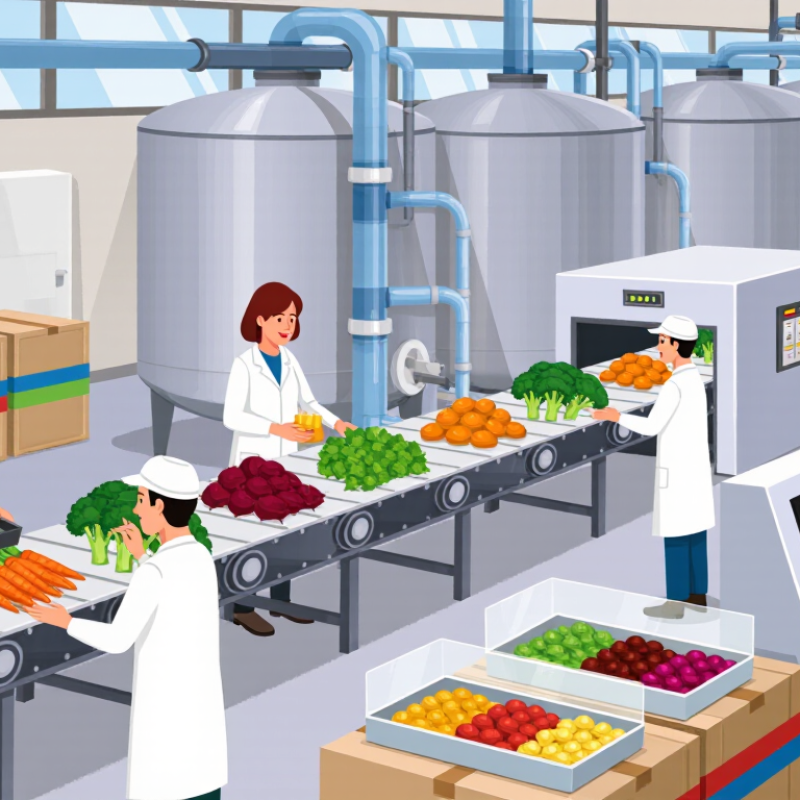
Top 10 Bulk Vegetable Concentrates Suppliers Worldwide

What Bulk Vegetable Concentrates Are and How They Are Made

Bulk vegetable concentrates are purified, reduced vegetable liquids used in soups, sauces, beverages, seasonings, and prepared foods. They usually begin with fresh or frozen vegetables, such as carrots, onions, celery, tomatoes, or leafy greens. Processors wash and sort the raw material, remove damaged pieces, then crush or press it. The juice may be filtered before gentle heating removes part of its water. Vacuum evaporation helps protect color and flavor at lower temperatures. Some facilities use freeze concentration instead. The result is thicker, easier to transport, and more stable than raw vegetable juice.

Quality depends on more than appearance. Buyers should review Brix levels, acidity, microbial results, allergen controls, pesticide compliance, and batch traceability. A reliable supplier can explain its processing temperatures and packaging conditions. Concentrates may be packed in drums, aseptic bags, or frozen containers. Storage requirements vary. A bright color can be attractive, but it does not always prove better nutrition or flavor. No process is perfectly neutral. Heat, oxygen, and long storage can still reduce delicate compounds, and this point deserves honest evaluation.

Tips: Request a recent specification sheet and certificate of analysis. Compare several batches, not just one sample. Ask whether the concentrate contains added water, salt, sugar, carriers, or preservatives. Confirm the declared vegetable percentage and reconstitution instructions. Small differences matter. A pilot test in your own recipe can reveal viscosity, aroma, sediment, and color changes that laboratory data may miss.

How Global Vegetable Concentrate Suppliers Are Evaluated

Top 10 Bulk Vegetable Concentrates Suppliers Worldwide: How Global Vegetable Concentrate Suppliers Are Evaluated

Global buyers should evaluate suppliers beyond price, production volume, and attractive catalogs. Reliable suppliers show clear sourcing records, processing details, and batch-level traceability. Important checks include Brix levels, color consistency, viscosity, microbiological results, and pesticide-residue testing. Samples should match the technical specification after dilution, not only in the original drum.

Processing experience matters. Efficient suppliers control heat exposure, oxygen contact, and storage conditions during concentration. These factors influence flavor, nutrient retention, and shelf life. Buyers should review certificates, audit reports, food-safety systems, and independent laboratory results. A supplier’s ability to explain deviations also reveals practical expertise. No operation is perfect. One overlooked seasonal change can affect color or solids.

Tips: Request samples from different production lots. Compare them under identical conditions. Ask for a recent certificate of analysis, not an old template. Confirm packaging strength, pallet protection, and temperature records during shipment. Speak with technical staff, not only sales representatives. Small details matter. It is also wise to test concentrate performance in the final recipe, because laboratory results cannot predict every processing issue. A supplier may meet every listed number yet still deliver a product with a weaker aroma or unstable texture.

Top 10 Bulk Vegetable Concentrates Suppliers Worldwide

Top 10 Bulk Vegetable Concentrates Suppliers Worldwide

The top 10 bulk vegetable concentrates suppliers worldwide should be assessed beyond price and catalogue size. FAOSTAT data places global vegetable production at roughly 1.2 billion metric tonnes in 2022, depending on crop classification. This scale creates pressure on suppliers to secure stable raw materials, control seasonal variation, and document origin. Experienced buyers should request Brix ranges, colour specifications, microbiological limits, pesticide testing, and batch traceability. Small details matter.

Supplier performance is easier to compare through measurable evidence. The OECD-FAO Agricultural Outlook 2024–2033 expects continued growth in food demand, while climate volatility may disrupt vegetable yields and processing schedules. Reliable suppliers should therefore show multi-region sourcing, validated concentration methods, and realistic lead-time records. Codex food standards also support clear hygiene controls and contaminant management throughout processing. Yet documents alone are not enough. I would still test viscosity, flavour intensity, sediment, and reconstitution performance in the final application. A concentrate can meet its certificate and perform poorly in a production tank. That is an uncomfortable gap. Procurement teams should review recent certificates, audit reports, storage conditions, and complaint rates before ranking the leading global suppliers.

Product Ranges, Certifications, and Regional Market Coverage

Bulk vegetable concentrate suppliers increasingly serve food, beverage, sauce, and nutrition manufacturers across several regions. Product portfolios commonly include carrot, beetroot, pumpkin, tomato, spinach, celery, onion, and mixed vegetable concentrates. Some suppliers also offer powders, purees, frozen formats, and standardized color ingredients. According to FAO’s 2024 Food Outlook, global food production and trade remain exposed to climate volatility and logistics disruption. Procurement teams should therefore examine crop origins, harvest timing, and backup processing sites.

Certification separates serious suppliers from basic traders. Common evidence includes HACCP plans, ISO 22000, FSSC 22000, organic certification, halal approval, kosher approval, and non-GMO documentation where applicable. The Global Food Safety Initiative’s benchmarked schemes support more consistent food-safety assessments across international supply chains. Buyers should request recent audit dates, allergen controls, pesticide testing, heavy-metal results, and microbiological specifications. A certificate alone proves little. Traceability must reach the farm or approved collection point.

Regional coverage also affects product reliability. European suppliers often emphasize organic compliance, clean-label processing, and strict contaminant controls. North American distributors usually provide broad warehouse networks and flexible contract volumes. Asian suppliers may offer competitive pricing and strong access to tomato, carrot, onion, and tropical vegetable streams. The OECD-FAO Agricultural Outlook 2024-2033 highlights continuing growth in agricultural trade, but regional dependence can increase risk. This comparison remains imperfect: supplier capacity may change after weather events, energy shocks, or regulatory updates. Requesting samples from two harvest periods is a practical safeguard.

How to Select the Right Vegetable Concentrate Supplier

Selecting a vegetable concentrate supplier requires more than comparing price per kilogram. Start with crop origin, harvest season, and processing location. The FAO’s State of Food and Agriculture 2019 reported that about 14% of food is lost between harvest and wholesale. Suppliers with rapid chilling, documented transport, and stable farmer networks may reduce quality losses.

Ask for a current specification sheet and a representative certificate of analysis. Check Brix, pH, color, viscosity, microbial limits, pesticide screening, and allergen controls. Testing should follow recognized laboratory methods, not only internal procedures. ISO 22000 certification and a verified HACCP system can support food-safety assurance, but certificates still require careful checking. Paperwork is not proof alone.

Evaluate three production lots, not one perfect sample. Compare flavor after dilution, sediment after storage, and performance in your actual formula. Request traceability records from farm to finished drum. The FAO also identifies fruits and vegetables as highly vulnerable to losses because of their perishability. This makes cold-chain evidence important. I would also review recall history and complaint response time. Many buyers overlook this.

A reliable supplier should explain minimum order quantities, lead times, packaging barriers, and seasonal substitutions. Request samples in the final container size. Small details matter. Pricing should include freight, testing, storage, and possible reformulation costs. A cheaper concentrate may become expensive after repeated batch adjustments. Supplier selection is never perfectly objective; sensory preference and application performance still need human judgment.

FAQS

What should buyers check before choosing a vegetable concentrate supplier?

Check crop origin, harvest season, processing location, and traceability records. Request Brix, pH, colour, viscosity, microbial limits, and pesticide results. Details matter.

Why is multi-region sourcing important?

Weather can reduce vegetable yields and delay processing. Multi-region sourcing may improve supply continuity. It does not remove every seasonal risk.

How many production lots should buyers evaluate?

Test at least three recent lots. Compare flavour, colour, sediment, and viscosity. One excellent sample can create false confidence.

Why should concentrates be tested in the final formula?

A concentrate may meet its certificate yet perform poorly in production. Test dilution, flavour intensity, sediment, and tank behaviour. The gap can be uncomfortable.

What food-safety documents should a supplier provide?

Request current specifications, certificates of analysis, audit records, and traceability documents. Check hygiene controls and allergen management. Paperwork is not proof alone.

How does cold-chain handling affect vegetable concentrates?

Fresh vegetables can deteriorate quickly after harvest. Ask for chilling records, transport conditions, and storage temperatures. A warm delivery may change flavour and colour.

Which commercial details should buyers confirm?

Confirm minimum order quantities, lead times, packaging barriers, and seasonal substitutions. Include freight, testing, storage, and reformulation costs. The cheapest drum may not be cheapest overall.

How should buyers judge supplier reliability?

Review complaint rates, recall history, response times, and recent delivery performance. Ask for realistic lead-time records. Reliability is proven over time, not promised once.

Conclusion

Bulk Vegetable Concentrates are produced by carefully processing fresh vegetables to remove much of their water while preserving key flavors, colors, nutrients, and functional properties. This article explains the main production stages, including preparation, extraction, filtration, concentration, quality control, and safe packaging. It also outlines how international suppliers are evaluated through product consistency, processing capabilities, traceability, food safety systems, certifications, technical support, and delivery reliability.

The guide presents a practical overview of the top 10 supplier categories in the global market without focusing on individual brand names. It compares typical product ranges, such as concentrates made from leafy greens, roots, tomatoes, and other vegetables, while considering certification requirements and regional market coverage. Finally, it offers a clear framework for selecting the right supplier based on application needs, concentration strength, minimum order quantities, customization options, pricing, logistics, and long-term cooperation potential.

Amelia

Amelia

Amelia is a marketing professional who combines a deep understanding of the company’s products with a clear, customer-focused approach to communication. She regularly contributes expert articles to the company website, sharing practical insights, explaining product features, and helping readers......